
Voice and visual search are reshaping discovery. DXDasia explains what Singapore brands must do to stay findable as search behavior changes.
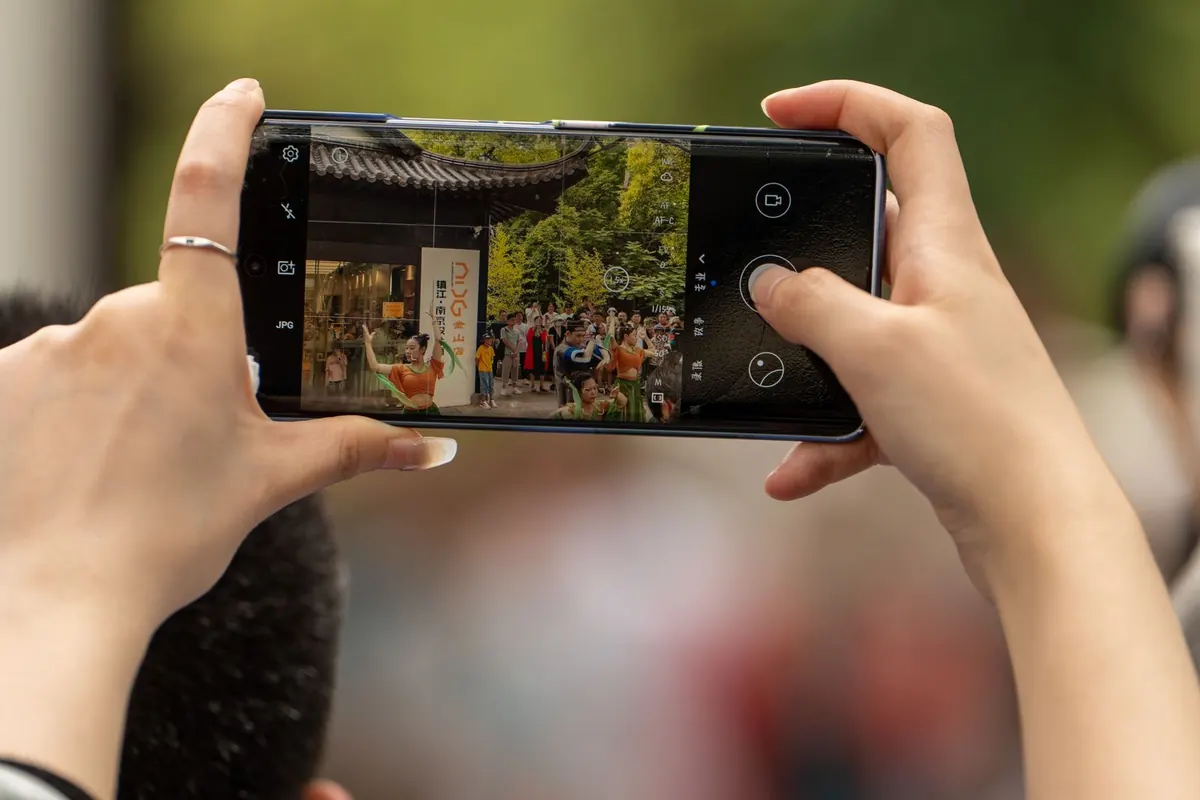
Quick answer: Singapore brands should prepare for search that starts with a photo or a spoken question. Nearly everyone is online on a smartphone, Google handles over 90% of searches, and Lens and Circle to Search run billions of visual queries monthly. Win with strong product images, Merchant Center, Product structured data, a complete Business Profile and multilingual pages.
Singapore is one of the most connected markets on earth, and it searches in four official languages plus Singlish. Over the past two years Google has turned the camera and the microphone into full search inputs: point a phone at a product, circle something on screen, or ask a question out loud and get an answer back. This guide sets out what the data actually shows about voice and visual search, what is specific to Singapore, and the practical changes that help a Singapore brand get found when the query is a photo or a spoken sentence rather than typed keywords.
Almost everyone. Nearly the whole population is online on a smartphone, and Google handles the vast majority of searches, so the tools that power voice and visual search are already in Singaporeans' pockets. What does not exist yet is a reliable public figure for how many Singapore searches are spoken or visual, and you should be wary of anyone who quotes one without a source.
The baseline is clear. DataReportal's Digital 2026 Singapore report counts 5.78 million internet users at the end of 2025, an online penetration of 98.4 percent, with 9.79 million cellular mobile connections, equal to 166 percent of the population. The government's own Singapore Digital Society Report 2023 from IMDA found that 97% of residents own a smartphone and 99% of resident households have internet access (2022 data), with ownership among seniors aged 60 and above at 89%. On the search side, Statcounter puts Google's share of Singapore search at 92.16% in September 2026.
| Measure | Figure | Source |
|---|---|---|
| Internet users, end of 2025 | 5.78 million (98.4% of population) | DataReportal 2026 |
| Cellular mobile connections, late 2025 | 9.79 million (166% of population) | DataReportal 2026 |
| Residents who own a smartphone (2022) | 97% | IMDA, 2023 report |
| Google share of search, September 2026 | 92.16% | Statcounter |
| English as main home language (2020) | 48.3% of residents aged 5+ | Census 2020 |
| Singapore digital economy GMV, 2025 projection | US$29 billion, up 7% on 2024 | e-Conomy SEA 2025 |
That last line matters for commercial brands: the e-Conomy SEA 2025 report by Google, Temasek and Bain projects Singapore's digital economy gross merchandise value at US$29 billion in 2025. A small, wealthy, fully mobile market with one dominant search engine is exactly where a shift in how Google takes queries shows up first.
Visual search is now a mainstream Google behaviour measured in tens of billions of searches a month. Google's own figures have climbed every time it has updated them, though each number comes from a different date, so treat them as a timeline rather than one snapshot.
Circle to Search, which lets Android users draw around anything on their screen to search it, has grown just as fast. It was on more than 150 million Android devices in October 2024, more than 250 million devices by April 2025 (when usage rose close to 40% quarter on quarter), and more than 300 million Android devices by July 2025.
| Date | Visual search milestone | Source |
|---|---|---|
| Oct 2024 | Nearly 20 billion Lens searches a month; 20% shopping-related; Circle to Search on 150M+ devices | |
| Apr 2025 | Lens searches up 5 billion since October; Circle to Search on 250M+ devices | TechCrunch |
| May 2025 | Lens up 65% year on year; 100 billion+ visual searches so far that year | TechCrunch |
| Jul 2025 | Circle to Search on 300M+ Android devices, now with AI Mode follow-ups |
Google does not publish a Singapore breakdown. But with Google holding over nine in ten searches here and smartphone ownership near universal, there is no reason to think Singapore lags the global trend, and the 18 to 24 skew Google describes is the cohort Singapore retailers are fighting hardest for.
Voice stopped being a separate "assistant" habit and became a way into Google Search itself, now combined with the camera. That changes the job from writing for smart speakers to writing for spoken, conversational questions answered by AI.
Three dated changes stand out. In October 2024 Google added the option to ask a question with your voice any time you take a photo with Lens, initially for English queries. In March 2026 it made Search Live available in more than 200 countries and territories, wherever AI Mode is available; users tap a Live icon in the Google app, or the Live option inside Lens, then talk to Search and point the camera at what they are asking about. Google says the underlying model, Gemini 3.1 Flash Live, is "inherently multilingual". And in July 2026 Alphabet said AI Mode, its conversational search experience, had surpassed 1 billion monthly active users since expanding globally the previous October.
The practical effect for a brand: a Singapore shopper can now hold up a bottle of serum, ask aloud "is this suitable for sensitive skin and where can I buy it nearby", and get a spoken, AI-written answer that draws on product pages, merchant data and Business Profiles. If your information is not in a form Google can read and trust, you are not in that answer. Our sibling guide on voice search optimisation for small businesses covers the general voice and local basics; the rest of this article focuses on what is specific to Singapore and to the camera.
Because Singaporeans switch languages, and Google decides which language a page is in from the words on it. A brand that only publishes in English is invisible to part of its market when the query arrives in Mandarin, Malay or Tamil, by voice or by text.
The Census of Population 2020 found English was the language most frequently spoken at home for 48.3% of residents aged 5 and over, up from 32.3% in 2010. Mandarin followed at 29.9%, then Malay at 9.2%, Chinese dialects at 8.7% and Tamil at 2.5%. The census also notes that among residents who spoke English most at home, over 80% also spoke a vernacular language at home. In other words, most households are bilingual, and the language someone searches in can change with the topic, the person they are with, or whether they are speaking or typing.
Google's tooling reflects this. Lens can translate menus, signs, handwriting or anything else in over 100 languages, and AI Mode's October 2025 expansion added more than 35 new languages and over 40 new countries and territories. On the website side, Google Search Central is explicit that it determines a page's language from visible content: "We don't use any code-level language information such as lang attributes, or the URL." It recommends separate URLs for each language version, hreflang annotations to link them, and warns against automatically redirecting visitors based on an assumed language.
On one Singapore B2B account we manage, a large share of conversions came from people Google could not place inside Singapore at all: searchers typing "singapore" into the query, or browsing from corporate and VPN networks. Local search behaviour here is often explicit in the words people use, which is one more reason to put place names, product names and the language your customers actually use into the visible text.
Make your products, place and answers machine-readable in the formats Google's camera and AI features draw on: images, product data, Business Profile and plain conversational text. None of this is exotic, and most of it is free.
Do not chase "voice search keywords" lists or stuff alt text with every variant of a product name; Google's own example is a plain description such as "Dalmatian puppy playing fetch". Do not hide prices or availability in images, because the AI layer needs text. And do not judge success by a "voice traffic" report: Google Search Console does not separate spoken or camera queries, so measure what you can, such as image search impressions, merchant listing clicks and Business Profile actions.
Three findings from our own Singapore work shape how we approach this.
First, the textbook rule can be wrong for Singapore. On one Singapore instrumentation-measurement account (measured August 2026, last 30 days, Search campaigns), "area of interest" traffic produced 22 conversions from 147 clicks, about a 15% conversion rate, versus 4 conversions from 69 clicks for "presence" traffic. Switching to presence-only, the standard advice, would have removed roughly 85% of that account's conversions. Those visitors were mostly Singapore searchers typing "singapore" in the query or browsing from corporate or VPN networks. The lesson carries over to voice and visual: measure how your own customers search before applying generic advice.
Second, visual search rewards a clean product catalogue. When one retail client connected its 444-item product catalogue to WhatsApp, we could build catalogue messages that let customers browse every product inside the chat, and carousel messages that show specific products and link back to the website. The same structured catalogue data, with accurate titles, prices and images for every item, is what Google Merchant Center and visual shopping results depend on.
Third, the basics still compound, and they show up in results. You can see the effect of steady search work for a Singapore B2B supplier in our industrial instruments case study, where qualified leads grew 4x.
Most Singapore brands should spend their next quarter on visual readiness, not voice gimmicks. The evidence points one way: Lens and Circle to Search volumes are large, growing and heavily commercial, Google's spoken search now runs through the same AI Mode and Lens pipeline, and both read the same inputs, namely product images, merchant data, Business Profiles and clear page text. A brand with a clean Merchant Center feed, proper Product markup, a complete Business Profile and genuinely bilingual pages is ready for both. A brand that buys a "voice search package" without those foundations is paying for nothing. If you want a second opinion on where your site stands, our SEO team starts every engagement with exactly this audit.
Yes. People use Lens to identify places, signs and things around them, and Search Live now lets them ask about what the camera sees. A complete Business Profile with a logo, cover photo and real images of your shopfront and products, plus clear text on your website, gives Google more to match and quote, even if you never sell online.
No. Translate the pages where there is real demand in that language, such as key services, products and contact details, and have a fluent person check them. Give each language version its own URL and connect them with hreflang. A thin, machine-translated copy of every page adds little and can read poorly to customers.
Not directly. Google Search Console does not label spoken or camera queries separately. You can track proxies: impressions and clicks from Google Images, performance of free product listings in Merchant Center, and calls, direction requests and website clicks in your Business Profile. Watch the trend in those numbers after you improve images and product data.
It is a reason to write the way customers speak. Google says the model behind AI Mode is built to grasp the subtleties of local languages, and Search Live is designed for natural, back-and-forth conversation. Use the product names, place names and everyday phrasing your customers actually use, alongside standard English, in your page text and FAQs.
Start with free listings. Singapore is one of the countries where Merchant Center lets you show products free of charge on Google, and a clean feed with good images is the same foundation paid Shopping campaigns use. Once the feed is healthy and you can measure sales, test paid campaigns with a small budget and compare cost per sale.