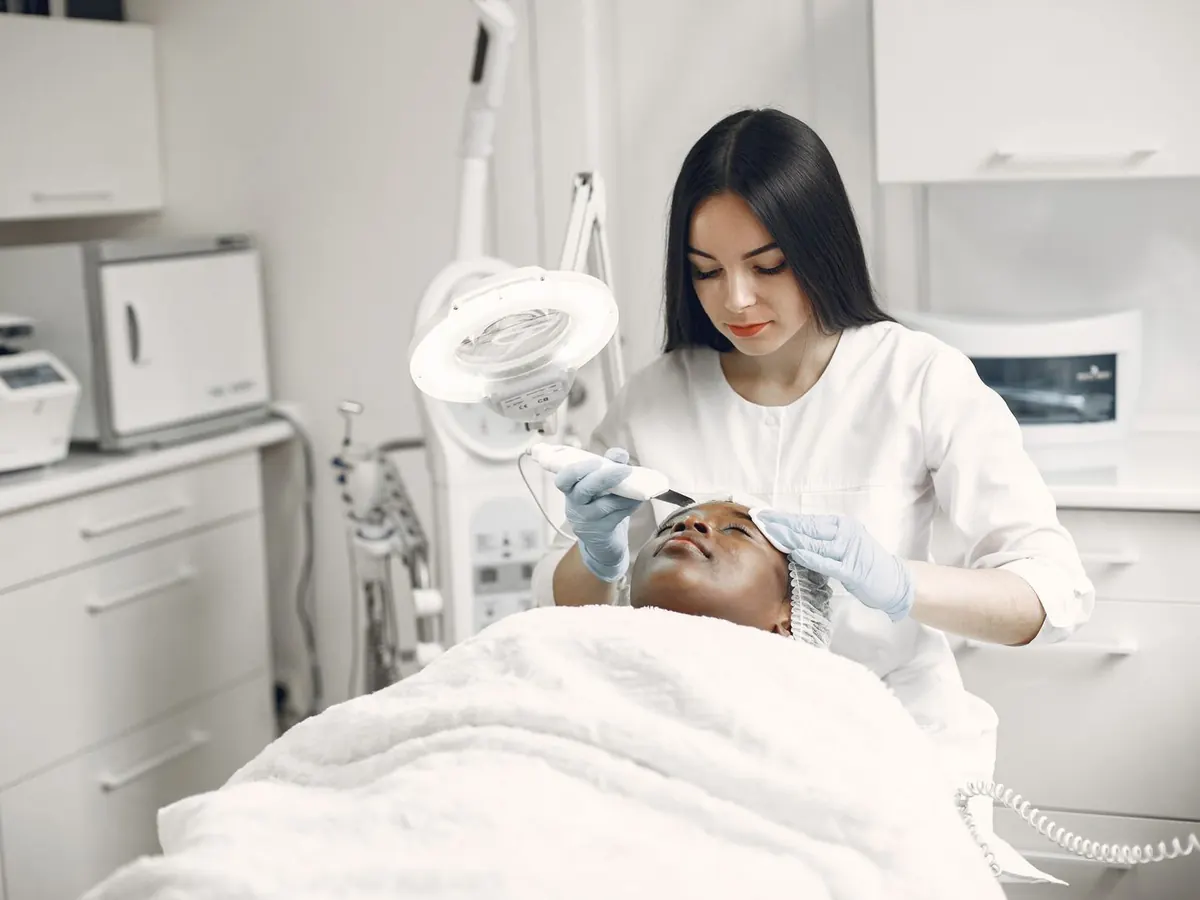
A group of healthcare and wellness clinics relied on referrals and had little digital visibility. DXDasia built a local-search and conversion system that grew appointment enquiries 5.1×.
5.1× Growth in Appointments
Patients search locally and decide quickly, but the clinics were nearly invisible online and dependent on referrals.
We captured local demand and made it effortless to take action from a phone.
The clinics reduced referral dependency and grew appointments predictably:
Healthcare marketing lives and dies on local visibility and trust. By owning nearby search and removing friction from booking, the clinics turned strangers searching on their phones into booked appointments.
Local search intent is unusually strong in healthcare — people searching for a clinic are typically ready to book, not just browsing — so the strategy prioritised local-search visibility and a booking flow with as little friction as possible over broader brand campaigns. Trust signals (reviews, credentials, clear service descriptions) were treated as conversion elements, not just nice-to-haves, since healthcare decisions lean heavily on trust before a stranger will book an appointment.
Clinic marketing is local, trust-heavy and regulated. This section sets out what published sources say about advertising rules, patient data and review behaviour. It is general guidance on marketing and data handling, not clinical or legal advice, and it makes no claim about any treatment's outcome.
In Singapore, MOH's Advertisement Regulations FAQ.pdf) (updated October 2023) sets the tone. Laudatory statements, meaning subjective praise, are prohibited whether or not they are accurate. The FAQ lists examples of advertising that solicits or encourages use of a licensable service, including before-and-after photos, promises of results within a time period, and promotions for free or discounted services. Whether your services are licensable at all is worth checking, because the FAQ treats that as a separate question.
Reviews are handled separately. Licensees may not reproduce testimonials or endorsements on their website or social accounts, though material given directly to the institution by the patient may be displayed on its premises, website or social media if it is organic. Unsolicited reviews on third-party platforms are not treated as the clinic's advertising.
PDPC's Advisory Guidelines for the Healthcare Sector, revised 20 September 2023, work through clinic scenarios. One example: a hospital cannot rely on deemed consent to market health products unrelated to a patient's condition, so it should notify the patient and obtain express consent. The guidelines also say the Do Not Call provisions apply to messages promoting goods or services, with exclusions such as messages sent within an ongoing relationship whose sole purpose relates to that relationship. If a breach occurs, PDPC's guidance refers to a three-day deadline for notification.
In India, the DPDP Rules were notified on 14 November 2025, with an eighteen-month phased period and a separate, purpose-specific consent notice.
BrightLocal's 2026 survey found 31% of consumers will only use a business rated 4.5 stars or more (17% in 2025) and Google's share as a review source fell from 83% to 71%. A December 2024 US survey by vendor rater8 of 1,008 adults found 84% check reviews before choosing a provider, 45% value providers who respond to reviews, and 41% say seeing responses raises their trust.
The common thread is that trust is earned in small, checkable ways: a profile that matches reality, wording that does not overpromise, consent that is recorded, and replies that respect privacy. Clinics that treat these as operating standards rather than marketing tasks tend to be easier to defend if a regulator, an insurer or a patient asks questions later.
| Topic | What the source says | Source |
|---|---|---|
| Praise in ads | Laudatory statements prohibited, accurate or not | MOH FAQ.pdf) |
| Unrelated health-product marketing | Needs express consent, not deemed consent | PDPC, 2023 |
| Minimum stars for 31% of consumers | 4.5 or higher | BrightLocal, 2026 |
| Patients checking reviews first | 84% (US, vendor survey) | rater8 |
Advertising, consent and review benchmarks for clinics.
These steps help a clinic capture nearby demand while handling patient trust and data with care.
With appointment enquiries now growing consistently, the clinics are positioned to expand into additional service lines using the same local-search foundation rather than starting visibility from zero for each new offering. The booking-flow improvements are also being extended to the clinics’ online scheduling for follow-up visits, not just first appointments.
MOH's FAQ lists promotions for free or discounted services among examples of advertising that solicits or encourages use of a licensable service. Whether and how that is allowed depends on the specific regulation, so read the FAQ.pdf) and ask your compliance adviser before publishing any offer. Ask your compliance adviser before running any offer.
The FAQ says licensees may not reproduce testimonials, endorsements or photos on their website or social media, but material given directly to the institution by the patient may be displayed if organic and free of inducement. Unsolicited third-party reviews are generally not treated as your advertising. Check the current FAQ.pdf).
It depends on the message. PDPC's healthcare guidelines say a hospital cannot rely on deemed consent to market health products unrelated to a patient's condition, and the Do Not Call provisions apply to promotional messages. Obtain express, recorded consent for marketing; see PDPC's guidelines.
Assess it immediately. PDPC's guidance refers to a three-day deadline for notifying where a breach is notifiable, and affected individuals may also need to be told. Prepare a response plan in advance, and read PDPC's breach guidance. In India, DPDP penalties for security failures can reach ₹250 crore. For wider security and compliance support, see our service page. See also our aesthetics clinics case study.
There is no fixed number, but expectations are high. BrightLocal's 2026 survey found 31% of consumers only use businesses rated 4.5 stars or more, and Google remains the leading review source at 71%. Aim for a steady flow of genuine, recent feedback rather than a one-off push. See the survey.